
Play AppSec WarGames
Want to skill-up in secure coding and AppSec? Try SecDim Wargames to learn how to find, hack and fix security vulnerabilities inspired by real-world incidents.

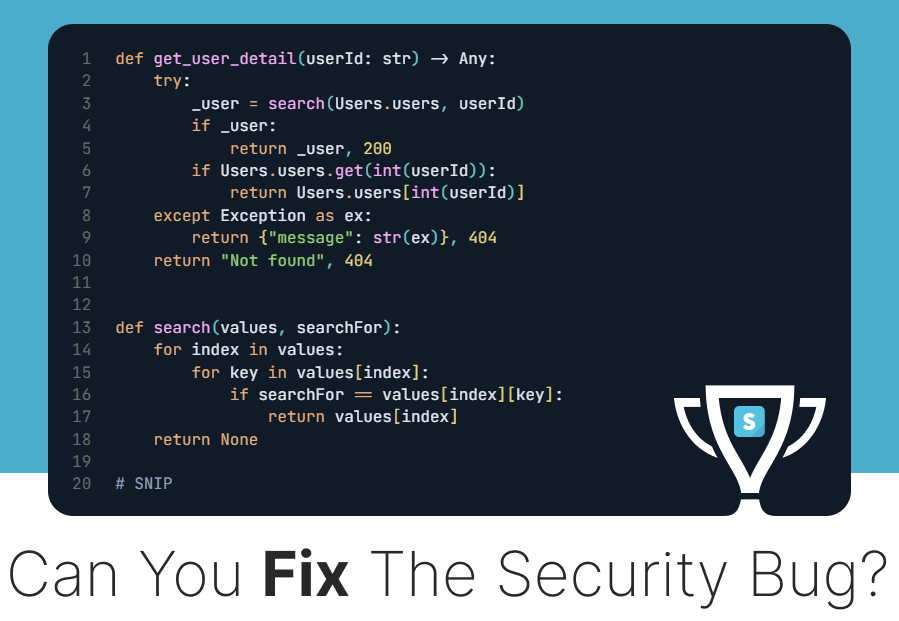
In September 2022, Optus, Australia’s third-largest telecommunications provider, suffered a significant data breach, compromising sensitive personal data of nearly 10 million customers, approximately a third of Australia’s population. The breach involved the exfiltration of customer names, birthdates, addresses, phone numbers, emails, passport numbers, and driving license details.
The breach’s root cause was identified as an insecure Application Programming Interface (API). According to reports, including statements from government officials and an Optus insider, the API was mistakenly exposed to a publicly accessible test environment due to human error, enabling unauthorized external access.
The API endpoint /users/{userId} was designed to return user details based on the userId provided. Several critical flaws include:
Insufficient Authentication and Authorization:
The API did not implement necessary authentication mechanisms, allowing unauthenticated attackers to query and retrieve sensitive user information.
Insecure Direct Object References (IDOR):
The endpoint directly used user identifiers without proper access checks. Attackers exploited this vulnerability by iterating over potential user IDs, systematically extracting user data.
Poor Error Handling and Exposure of Internal Structures:
Exception handling revealed internal system details through error messages, aiding attackers in enumerating user data.
Example of flawed code snippet:
def get_user_detail(userId: str) -> Any:
    try:
        _user = search(Users.users, userId)
        if _user:
            return _user, 200
        if Users.users.get(int(userId)):
            return Users.users[int(userId)]
    except Exception as ex:
        return {"message": str(ex)}, 404
    return "Not found", 404
This implementation allowed enumeration through sequential or brute-force techniques due to missing security controls, directly contributing to the mass data exfiltration.
Learn more about the faults in the API in our Technical Writeup of the incident.
Optus faced criticism from government officials for inadequate transparency and cooperation during incident handling. The company subsequently implemented several mitigation steps:
The Australian government responded by proposing legislative reforms enhancing cybersecurity practices and mandating clearer reporting obligations for critical infrastructure providers.
This incident underscores several crucial cybersecurity lessons:
The Optus breach highlights the necessity for comprehensive API security protocols and proactive vulnerability management within enterprises handling sensitive data.
Read more about the incident: 2022 Optus data breach - Wikipedia
We made a challenge inspired by this incident: No Sutpo
It is available for Free for 2 weeks in our Weekly Incident Game.
Available languages:

Want to skill-up in secure coding and AppSec? Try SecDim Wargames to learn how to find, hack and fix security vulnerabilities inspired by real-world incidents.

Join our secure coding and AppSec community. A discussion board to share and discuss all aspects of secure programming, AppSec, DevSecOps, fuzzing, cloudsec, AIsec code review, and more.
Read more